Albany, NY · Garage Door Service
What Albany's Cold Winters Do to a 1960s Garage Door
Albany garage doors face cold-season drafts tied to 1960s-era housing stock. See what local conditions mean for seals, springs, and openers in this area.
- Repairs & new doors
- Springs & openers
- Serving 4 nearby communities
Doing Nothing For Now
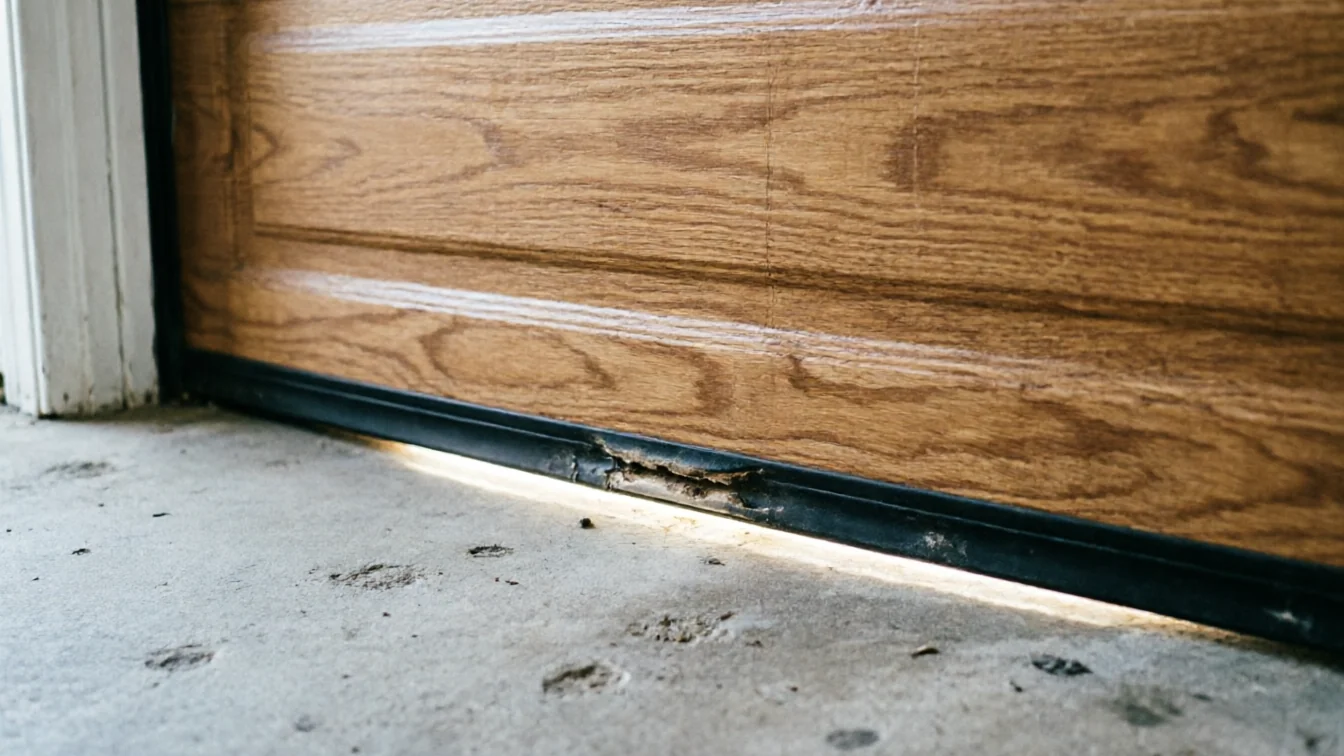
If your door still opens and closes on its own power, and the only complaint is a cold draft along the bottom edge on a January morning, you don't need to call anyone yet. A lot of what owners notice in this part of the region is weatherstripping doing exactly what thirty-year-old vinyl does in a cold-severe climate band - going stiff and shrinking just enough to let air through without failing outright. That's a $20 strip of seal, not a service call.
Where it gets less safe to wait is the hardware behind the seal. Housing in this service area runs mostly 1938 to 1982, with the typical house dated to 1961, so a lot of doors are either original equipment or a first-generation replacement from decades back. On that older gear, a little extra drag in cold weather isn't always cosmetic - it can be a spring losing tension under the strain of contracted steel. If the door moves smoothly and the noise is new but mild, give it a season and watch it. If it's getting harder to lift by hand, that's no longer a wait-and-see problem.
Our honest limit here: we can't tell you from a description alone whether your noise is a seal or a spring. If you're not sure, send us what you're seeing before you decide it's nothing.
When to Get Help
Call before the door fails completely, not after. A few specific signs matter more here than a general "something feels off." A torsion spring that creaks or bangs on a cold morning, especially on houses built in the 1960s-70s range that make up most of this stock, is often down to its last few winters of life - original springs on original hardware don't last forever, and this area has a lot of original hardware still in service.
Other signs worth a call: a cable that looks frayed or kinked anywhere along its length, an opener that strains and reverses on cold starts, ice forming at the bottom panel seal that keeps the door from seating flush, or a track that's pulled slightly away from the frame. None of these fix themselves, and in a cold-severe climate band they tend to get worse fast once the first hard freeze sets in rather than slowly over a mild season.
If the door is stuck halfway, don't force it with the opener - that's the fastest way to turn a spring job into a track and panel job. Disconnect the opener, leave the door where it is, and call.
The Problem
The core issue in this area isn't one bad part - it's the overlap of old hardware and hard winters. Housing here runs 1938 to 1982, median 1961, and that pattern repeats across the 41 named communities that make up this corner of the region. A door installed on a house built in 1961 has likely been replaced once, maybe twice, but the track, hinges, and spring mounting are frequently original-spec because nobody tears out a working garage frame to modernize it.
Set that housing age against a climate band rated cold-severe, and you get a specific failure pattern: steel panels contract in the cold enough to open small gaps at the seal line that widen every winter, torsion springs lose tension faster than the manufacturer's rated cycle count because cold steel is less forgiving under load, and nylon rollers that were fine in October start cracking in January. None of this is unique to one house - it's the whole stock, aging the same way at the same time.
We don't replace a whole door because the seal is worn. But when the seal, the spring tension, and the roller wear all show up on the same visit, replacement usually makes more financial sense than a third repair call in two years.
What Local Conditions Do
Cold-severe means more than "it gets cold." It means repeated freeze-thaw cycling through a winter, and that cycling is what actually wears a garage door down - not the cold itself but the door moving and contracting over and over against hardware that was torqued for warmer, more stable conditions when it was installed decades ago.
Across this service area there are 183,670 households and 74,272 owner-occupied houses, and a large share of those houses were built in the same roughly forty-year window - meaning a large share of the doors being lifted every cold morning are pushing fifty or sixty years old, or sit on a replacement door mounted on that original-era frame. At a median household income of $86,398, most owners here can plan a replacement on their own schedule rather than wait for an emergency, but that only works if the warning signs get caught early instead of ignored through one more winter.
We can't speed up how fast a part ships if yours is an older or less common size - some older torsion assemblies take longer to source than a standard double door spring. That's a real limitation, and it's worth knowing before you're standing in a cold garage needing it fixed today.
Frequently asked questions
Why does my garage door feel stiffer in the winter here than it did in the fall?
Steel panels and torsion springs both contract in cold weather, and in a cold-severe climate band that contraction is significant enough to change how much force the opener needs. On older hardware, common across this area's 1960s-70s housing stock, that extra load is often the first sign a spring is near the end of its life.
Is it normal for cold air to come through the bottom of my garage door?
Some draft is normal once weatherstripping ages, which happens faster here given the seasonal swings. If the draft is new and strong, check whether the bottom seal has shrunk or cracked. If the door also seats unevenly, that's a track or hinge issue, not just a seal, and worth a look.
My house was built in the early 1960s - should I worry about the original door hardware?
Not automatically, but it's worth a check. A lot of houses in this area date to that same window, and original torsion hardware from that era is often undersized or mismatched for current door weights. If it's still running smooth and quiet, there's no rush, but don't wait for a failure to find out otherwise.
Can I just replace the weatherstripping myself?
Yes, bottom seal and side weatherstripping are straightforward swaps for most owners. Where it gets trickier is if the track or frame has shifted slightly over the decades, which is common on older houses in this area - then a new seal won't seat right until that's addressed first.
Related garage door services in Albany
More garage door guides
Book garage door service in Albany
Call now or request a quote - tell us what the door is doing and where you are.