
Albany, NY · Garage Door Service
Why a Door Goes Off Track in an Albany Home
Albany's 1960s-70s housing stock and severe cold climate push garage door tracks out of alignment. Here's why it happens and when it's worth a call.
- Repairs & new doors
- Springs & openers
- Serving 4 nearby communities
Doing Nothing For Now
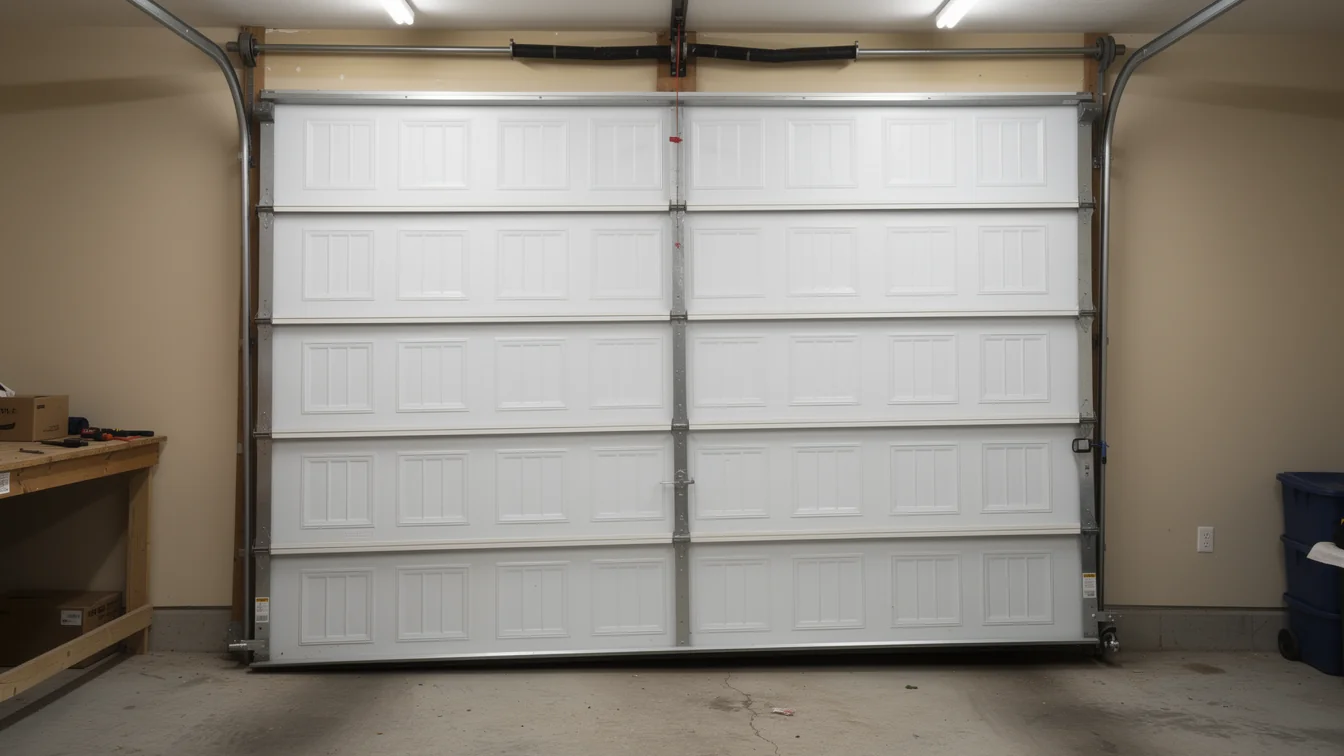
If the door still opens and closes but you hear a scrape or see a roller riding the edge of the track instead of sitting inside it, you can usually wait a short while before calling anyone. Most of the housing around Albany went up between 1938 and 1982, with the median build year landing at 1961, so a lot of these doors are running on track and hardware that's older than the owner. A roller that's slightly out of line isn't an emergency on its own. What matters is whether it's getting worse week to week. Mark the spot on the track with a pencil and check it again in a week. If the gap hasn't moved, you have time. If it has, you're watching a bent track or a loose bracket working its way toward a jammed door, and waiting longer just means more wear on the opener motor trying to push a door that doesn't want to move straight. One honest limit here: we can't tell you over the phone whether a track is bent or just loose without someone laying a level on it, so don't let anyone quote a fix sight unseen.
When to Get Help
Call before the door comes fully off the track, not after. A door that's jumped the track on one side usually means a cable has slipped a drum or a hinge has sheared, and running the opener again can bend the track further or drop the door on a car, a foot, or a dog. If you hear a bang followed by the door sitting crooked in the opening, stop using the opener and the manual release, and get someone out. Given Albany's cold climate band, which sits in the severe category, a door that's already misaligned in October tends to get worse through the winter as steel contracts and metal fatigue at the bend point accelerates. Don't wait for spring to deal with a fall problem. Also worth a call: any door where the opener is straining audibly to pull a crooked panel through the opening, since that's the fastest way to burn out a motor that would otherwise last years. If your house falls in that common 1960s-70s build range across this area, the original track hardware was sized for the door it came with, not necessarily for a heavier replacement door installed later, and that mismatch shows up as exactly this kind of drift.
The Problem
A door goes off track almost always for one of three reasons: a bent track, a loose or missing bracket, or a roller that's worn down enough to rattle around inside track that was never resurfaced. Across the 41 named communities this area covers, from Rensselaer to Westmere to Colonie, the housing stock is overwhelmingly 1960s and 70s construction, and that generation of garage installs used lighter-gauge track than what goes in today. Decades of seasonal temperature swings loosen the lag screws holding brackets to the jamb, and once one bracket walks even an eighth of an inch, the whole track section pulls out of parallel with the door edge. On a double door this shows up faster because there's more panel weight pulling on fewer attachment points. We also see it on doors where a spring was replaced at some point but the track never got reset afterward - the door runs fine for a while, then the imbalance it was hiding shows up as a track problem.
What Local Conditions Do
Albany's severe cold band does two things to track alignment that milder climates don't deal with as much. First, steel track contracts in deep cold and expands again on the warm days in between, and that repeated movement works bracket screws loose faster than in a place with a flatter temperature curve. Second, cold makes grease on rollers and track stiffen up, so a door that's borderline misaligned grinds harder against the track edge in January than it did in September, accelerating wear on the exact spot that was already weak. Within four miles of Albany - Rensselaer, Westmere, Menands, Colonie - homes sit squarely in that same 1960s-70s band, built on track hardware sized for the climate conditions and door weights of that era, not for the heavier insulated doors many owners have since installed. That combination of older brackets, original-spec track, and a real winter is what pushes a slow drift into a door that's visibly off track by midwinter. None of this means the door is doomed - most of the time it's a bracket reset and a track adjustment, not a replacement.
Frequently asked questions
My garage door is making a grinding noise but still opens. Is that the track?
It's one of the first signs, especially in a house built in the 1960s or 70s like much of this area. Grinding usually means a roller is riding against the track edge instead of inside the channel. It won't fix itself, and in cold weather it tends to get worse fast, but it's not an emergency if the door still opens and closes.
Can I push the door back onto the track myself?
No. Garage door track carries real tension from the springs and cables, and forcing a panel back into a bent or detached track section can snap a cable or drop the door. If it's jumped the track, use the manual release, leave it where it sits, and call someone to look at the bracket and track before running the opener again.
Why does this happen more in winter here?
Albany's winters sit in the severe cold category, and steel track contracts and expands with the temperature swings. That repeated movement loosens bracket screws over time, and stiff cold grease makes rollers drag harder against a track that's already slightly out of line, which is why a lot of these calls come in during the colder months.
Related garage door services in Albany
More garage door guides
Book garage door service in Albany
Call now or request a quote - tell us what the door is doing and where you are.