Albany, NY · Garage Door Service
Is Your Albany Garage Door Worth Repairing or Time to Replace It
Albany's garage doors mostly date to the 1960s and 70s. Here's how the area's housing age and cold climate decide what's worth repairing and what isn't.
- Repairs & new doors
- Springs & openers
- Serving 4 nearby communities
Doing Nothing For Now
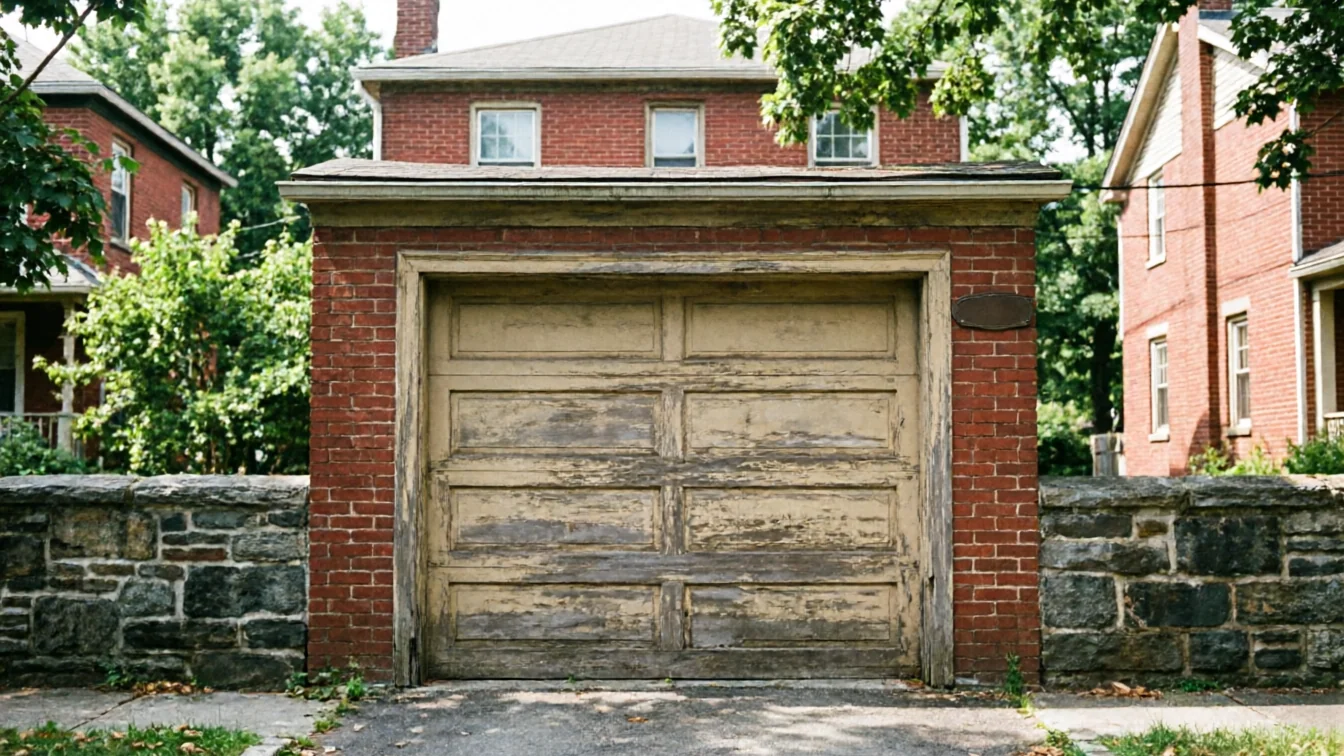
If your door still opens smoothly, closes all the way, and the spring isn't making a grinding or popping noise, you can usually leave it alone. A lot of houses in this service area were built between 1938 and 1982, with the median landing around 1961, so plenty of doors out there are decades old and still doing their job fine. Age alone isn't a reason to replace something. A stiff roller or a slightly loud opener chain doesn't mean failure is close. What matters more is whether the door is original to a house from that 1960s-70s wave that makes up most of the stock here. Those doors were built with steel gauges and spring cycles that assumed less temperature swing than what we actually get through a winter in this part of New York. If the door has been serviced at some point and the hardware isn't original, there's less urgency. Waiting is a reasonable choice when the door is working, even if it's old. What doesn't make sense is waiting once you've noticed a cable fraying or a panel rusting through at the bottom edge, because those don't fix themselves and they get worse fast once the cold sets in.
When to Get Help
Call when the spring makes a bang, when the door comes down crooked, or when it reverses on its own without anything blocking it. Those are failure signs, not maintenance items. In a COLD severe climate like this one, a torsion spring under stress from repeated freeze-thaw cycling doesn't give much warning before it lets go, and a door caught halfway on a dead spring is a safety issue, not an inconvenience. If your house falls into that 1938-1982 build range and nobody's touched the spring since the door went in, that's worth a look even before something breaks. Rust at the bottom bracket, a track that's pulled away from the wall, or an opener that strains and groans on every cycle are the other calls worth making. One limitation worth being upfront about: if the door is an original panel from that era and a section is cracked or badly dented, we often can't source a matching replacement panel. At that point the honest answer is a new door, not a patched one, even though that's not what anyone wants to hear when they just wanted one part fixed.
The Problem
The housing stock across this market runs old, mostly the 1960s and 70s, and across the 41 named areas that make up the service area that pattern holds pretty consistently. That means a lot of garage doors are still on their original spring and track hardware, sized for a door and a winter that don't quite match what's being asked of them now. Steel doors from that era are usually single-layer, with none of the insulation foam that later doors use, so they flex more in the cold and that flex is what fatigues a spring faster than age alone would. With 74,272 owner-occupied houses across this area, a meaningful number of them are still running the setup that came with the house, not something updated in the last twenty years. That's not a defect, it's just what happens when a door outlives several owners. The problem shows up as a spring that's done more cycles than it was rated for, hardware that's been painted over instead of greased, and tracks that were leveled once in 1968 and never touched again.
What Local Conditions Do
Albany's climate band is classified COLD severe, and that's the variable that actually decides whether an old door is worth saving. Cold steel is brittle steel. A spring that would flex and absorb a cycle fine at 60 degrees can snap at 10 degrees, and that's the temperature swing this area gets every winter, not an outlier event. Lubricant thickens, rollers seize slightly, and the extra resistance puts more load on an opener that's already working against a door heavier than it was when new, from decades of paint and moisture. At a median household income of $86,398, most owners here can reasonably weigh a repair bill against a full replacement without either one being a financial emergency, which is part of why it's worth getting a second opinion instead of defaulting to full replacement every time. The honest trade-off: a well-built original door from the 1960s stock, with new springs, cables, and rollers, can still outperform a cheap new door. But once the panels themselves are compromised, cold is what finishes the job age started.
Frequently asked questions
How do I know if my garage door is original to the house?
If your house was built in the 1960s or 70s, which covers most of this area's stock, and nobody in your paperwork mentions a door replacement, it's likely original. Look for a steel door with no foam backing and painted-over hinges. A tech can confirm by checking the spring stamp and hardware style on site.
Why do springs seem to break more in winter here?
Albany sits in a COLD severe climate band, and cold steel loses flexibility. A spring that handles a cycle fine in warm weather can snap under the same load once temperatures drop, which is why winter break calls outnumber summer ones in this area.
Is it cheaper to fix an old door than replace it?
Usually yes, if the panels and frame are sound and it's just springs, cables, or rollers. Once a panel from an original 1960s-70s door is cracked or rusted through, matching parts often aren't available, and replacement becomes the more practical option rather than a patched repair.
Related garage door services in Albany
More garage door guides
Book garage door service in Albany
Call now or request a quote - tell us what the door is doing and where you are.